Celestial Starry Night Backgrounds: A Designer's Night Sky Toolkit
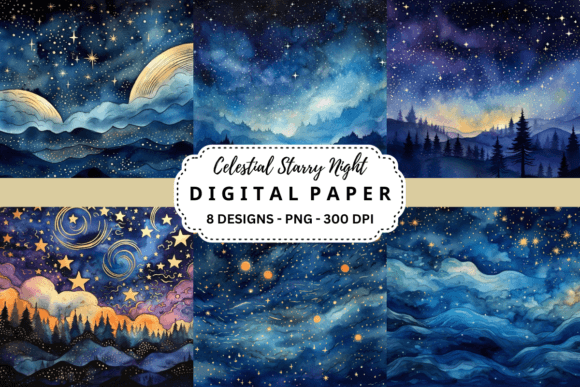
There's a particular magic in a clear night sky—one that evokes wonder, calm, and a touch of mystery. Translating that feeling into design work requires more than just a dark blue canvas and a few white dots. The Celestial Starry Night Backgrounds collection is designed to do exactly that, offering a set of eight high-resolution PNG files that serve as foundational design assets for a wide range of creative projects. Each image provides a detailed, atmospheric take on a starry sky, ready to be integrated into your workflow.
Understanding the Visual Character and Practical Appeal
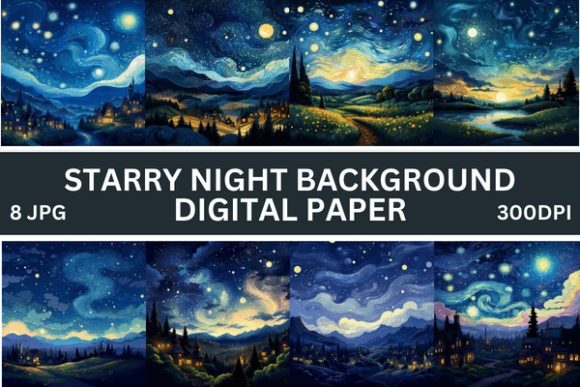
This isn't a generic space texture. The collection presents varied interpretations of a celestial theme, each with its own personality. You might find backgrounds that suggest a deep, tranquil cosmos with subtle nebula-like gradients, alongside others that feel more energetic with denser star fields or distinct constellation patterns. The consistent thread is a professional, polished aesthetic that avoids looking cartoonish or overly simplistic. The 300 DPI resolution and substantial 3600 x 3600 pixel dimensions are crucial here. This isn't just about sharpness on a screen; it's about having the necessary detail and scale for high-stakes print design projects where pixelation is unacceptable. For a brand identity system that needs a signature texture, or a poster design meant for a gallery wall, this quality is non-negotiable.
The true value lies in their versatility as a creative font of visual backdrop. Think of these PNGs not as finished designs, but as premium raw materials. They provide the mood, the depth, and the visual interest that can elevate a simple layout into something memorable. Their "personality" is inherently adaptable—calming for wellness brands, inspiring for educational content, and luxurious for editorial design or high-end packaging design. Because they are isolated PNGs, they integrate seamlessly into design software like Adobe Photoshop, Illustrator, or Affinity Designer, allowing you to layer text, illustrations, and other graphics with precision.
Strategic Applications Across Design Disciplines
Knowing where to deploy such assets is key to maximizing their impact. For social media graphics and web design, a starry background can instantly set a mood for a blog header, a podcast cover image, or a promotional banner for a nighttime event or a science-themed campaign. The high resolution ensures it looks crisp even when cropped or zoomed for different platform dimensions. In logo design or app icon development, a carefully cropped segment can add a unique textural element that helps a brand stand out, especially in tech, astronomy, or entertainment sectors.
For entrepreneurs and small business owners, the applications extend to tangible products. Imagine using these backgrounds for print on demand design projects—think premium notebook covers, phone case designs, or art prints. They are perfect for creating custom wrapping paper or sophisticated printing labels for products like artisanal candles, perfumes, or craft beverages, where the packaging must convey a specific story and quality. Crafters and hobbyists will find them invaluable for scrapbooking and creating unique invitation cards for events like weddings, milestone birthdays, or themed parties, adding a personal and professional touch that generic paper cannot match.
Integrating Backgrounds into a Cohesive Design System
Effective use of any design asset requires a thoughtful approach to integration. The primary consideration is contrast and readability. When overlaying text, ensure there is sufficient tonal or color contrast against the background. A bold, white sans serif font often works well for headlines against a darker sky, while a more delicate serif font or script font might be used for subheadings where the background is less dense. Always test your font pairing choices directly on the background at the intended size. The goal is to maintain a clear visual hierarchy, ensuring your message is legible and your design feels balanced, not cluttered.
Consistency is another pillar of professional design. If you're building a brand identity using these celestial themes, select one or two backgrounds from the set that best match your brand's color palette and emotional tone and use them repeatedly across your materials. This creates recognition. Use them for your website's hero section, your email newsletter headers, and your presentation slide backgrounds. This consistent application of a core visual element strengthens brand perception, making it feel more cohesive and intentional. It’s a strategy that moves a project from looking "designed" to feeling strategically branded.
A Practical Checklist for Your Project
Before you dive in, run through this quick evaluation:
- Define the Mood: Does your project call for wonder, calm, mystery, or energy? Browse the eight options to find the background whose personality aligns best.
- Test Scalability: Open the file and zoom to 100%. Does it hold up at the size you need? For a large banner, you need that 3600px width.
- Mock It Up: Don't just imagine—place your text and logo on a sample background in your design software. Check readability on both desktop and mobile previews.
- Consider the Full Set: Having eight variations offers flexibility. You might use one for your main brand and another for a seasonal campaign or a sub-brand, maintaining a thematic link while allowing for differentiation.
- Verify Licensing: For any commercial use—whether for a client, your own business, or a product for sale—ensure you understand the license that comes with the files. This is fundamental to professional practice.
In the end, the Celestial Starry Night Backgrounds collection is a practical toolkit for injecting depth and narrative into visual work. It’s less about the font itself and more about the world it creates behind your content. By choosing the right variation, pairing it with clean typography, and applying it with strategic consistency, you can leverage these assets to enhance professionalism, tell a more compelling visual story, and engage your audience on a more emotional level. It’s a direct way to add a layer of premium quality to everything from a social media post to a product label.